Showing posts with label NSA. Show all posts
Showing posts with label NSA. Show all posts
Sunday, February 4, 2018
Fabricated Memos and Credibility Problems
The much-hyped Nunes memo became public a few days ago, and I've been noticing a very interesting reaction to it in various corners of the internet; specifically, a lot of people are buying into it, lock, stock, and barrel. Now, the memo is obviously a steaming poo pile, but here's the thing: there are a lot of people who believe the memo to be true have a plausible argument for that belief. I don't mean the hardcore Trump supporters; at this point Trump could tell them he can walk through walls and they'd believe him. The people I'm thinking of are the ones who have been holding a long-standing suspicion of the government. All the government. Because the truth is, there is plenty of good cause for suspicion.
The assorted government agencies tasked with protecting America and its citizens - from TSA to the FBI to the DEA to NSA to CIA - have a credibility problem of their own making. It's not enough to say they all dropped the ball at one time or another, because "dropping the ball" implies that they failed because of something like bad luck or an innocent mistake. That's not the case at all. The credibility problem stems from the fact that these agencies misused their authority in a variety of unsavory ways. Two successive presidents and countless members of Congress told us we had to accept infringements to our Constitutional rights to combat an amorphous terrorist threat. The Director of National Intelligence perjured himself. Police forces began to resemble military units and no-knock SWAT raids became more common. An intelligence failure allowed an al-Qaida bomber onto a US-bound flight from Ghana through the Netherlands. And those are only a handful of post-9/11 examples. Do some digging, and there are many other historical ones: COINTELPRO, Watergate, the McCarthy hearings, the Pentagon Papers, the Tonkin Gulf Incident, and countless coups and covert wars. And all the documentation gets hidden behind a "TOP SECRET/NOFORN" label, nobody gets punished, and nothing changes. Given these organizations' history of past transgressions, it's natural to be skeptical of the FBI.
So does that mean the Nunes memo is correct? No, absolutely not. First, consider the source: Nunes, Trump, the GOP leadership. They've all discredited themselves long before this memo became public. Nunes was already caught trying to cheat on Trump's behalf once; and Trump's accusations fall short when you factor in that two individuals have already pleaded guilty for crimes pertaining to the Russia investigation, that there is a documented paper trail between Trump campaign officials and representatives of the Russian government, and, of course, there was a meeting at Trump Tower in June of 2016. And those are just the things we all know about. Add to that Trump and many of his cronies are well-known serial liars and conspiracy-theory peddlers. Finally, remember that as president, Trump has the authority and the resources to expose any illegal spying if he chooses. He can declassify NSA intercepts that targeted him, if they exist; he can order the Department of Justice to review the FISA warrants for impropriety. Occam's Razor says the simplest explanation is more likely to be true. Ask yourself: is it more likely that the investigation is legitimate and substantive or that the FBI is playing a central role in a broad "deep state" conspiracy against the small group of people in Trump's orbit?
Because that's what this is being packaged as: a deep, sinister conspiracy. The people pushing this idea performed a very subtle sleight-of-hand, one that's easy to overlook if you're not paying attention. They shifted the narrative from a claim that the government (in particular, the NSA) is collecting all Americans' communications (true) to an accusation that the government mobilized the resources of the entire intelligence/law enforcement community against the Trump clan in an unlawful attempt to neutralize it (horseshit.) We're witnessing the birth of a conspiracy theory on par with "9/11 was an inside job" right before our eyes. This "echo chamber" groupthink would normally be an object of ridicule, except that similar conspiracy theories have already driven people on the extreme fringes to violence not long ago. That's not something to take lightly.
If we could trust our institutions, there wouldn't be an issue; but our politicians and political appointees have squandered that trust for decades. Now we're reaping the bitter fruits of that wastefulness. The agencies, and their civilian overseers, have misused and abused their authority so badly, that now many people reflexively think they're lying and choose to believe con artists like Nunes and Trump instead. They're the spies who cried wolf, and just like the old fable goes, we're ignoring them at the very time when we should be believing them.
There needs to be serious reform once Trump is no longer president. He's only the byproduct of some deeper issues, and we need system-wide reform. He's a complete shit-show, so maybe he'll be the impetus that motivates the people in Washington to finally implement some long-overdue reforms.

Thursday, October 26, 2017
Hacking Pandora's Server
This is going to be a hot take (I think that's the term kids are using these days - okay, I'll stop trying to be cool now) about a news story I saw earlier. BoingBoing reports that computer techie types meshed an NSA cyberweapon with an old ransomware strain, and used amalgamation in the Wannacry ransomware attack from May of this year.
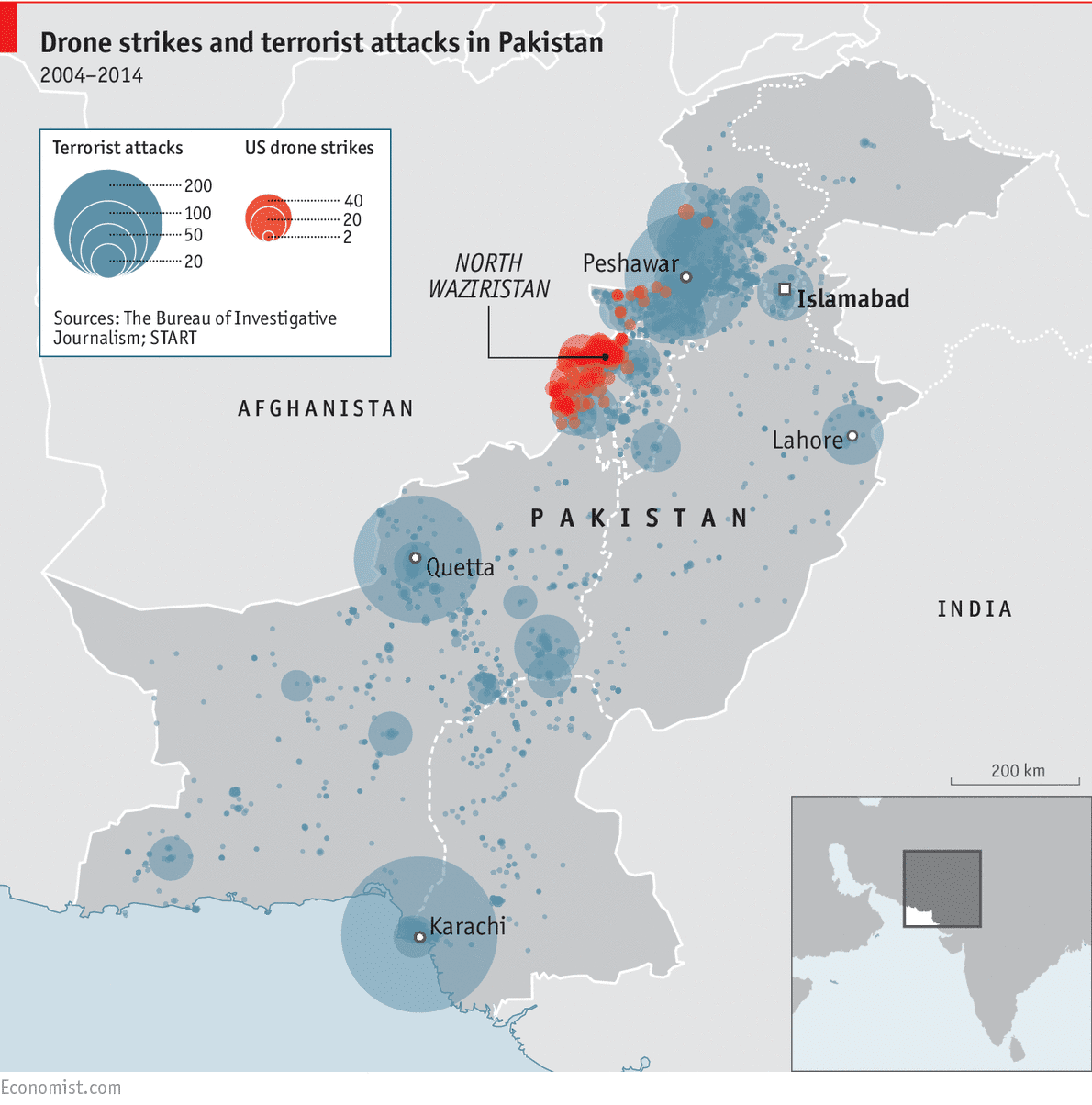
Here's what I think is the most important part of the story: the US develops this revolutionary super-weapon, and some unscrupulous party gets their hands on it, leading to dire consequences. This isn't the first time something like this has happened, by the way. I'm beating the drum about nuclear weapons because they provide many examples of dire consequences, but there are other weapons and technologies we probably don't want falling into the wrong hands. For example, UAVs (drones). Right now, the United States has a substantial lead in drone technology over other countries, but it's naive to think that could never change. Despite the justifiable criticisms of how America employs drones, it has shown some level of restraint (such as mostly refraining from conducting strikes over major urban areas - see the two images below).


The MQ-9 Reaper can carry several different munitions, including an air-to-ground antitank missile. Imagine what one of those could do to a crowd of people in a major city. Do you think it's impossible that someone might give the order to do so eventually?
Here's what I'm getting at. The United States is pretty talented when it comes to creating new weapons, but it doesn't put a lot of thought into anything after that. This lack of planning eventually comes back to haunt us, because other countries or groups figure out how to copy our tech or make their own versions. It's arrogant to think that we're the only country smart enough to invent these things.
So what's the answer? Do we destroy these weapons once we realize the potential damage they could create, along with all the research behind them? That's a good thought. Imagine if the people spearheading the Manhattan Project demolished all the machinery and burned their notes right after the Trinity Test, or Fritz Haber destroyed his work in 1914. Wouldn't we all be better off? Not necessarily. Like I said earlier, it's arrogant to assume that nobody else can develop something. The US wasn't the only nation conducting atomic weapons research in the 1930s and 1940s; if it had unilaterally halted development on the A-bomb, what country would have been the first to develop one? Probably the Soviet Union. How different does the Cold War look if the USSR is the only country with this weapon of unprecedented destructive capability? Even the stolen NSA techno-weapon worked so well because the agency smugly assumed nobody else would discover the vulnerability in Microsoft's SMB protocol that it found. Oops.
The best solution I can come up with is to define what is or isn't permissible early on, when you're the only one in possession of this new weapon. The way you use the weapon creates a norm for the rest of the world on what's acceptable. At the same time, start crafting and implementing international laws and conventions to govern the use of this new weapon; so that there's a standard with a little more authority than an unofficial norm in place. None of these things are perfect, and nations (or people) can violate norms, laws, or conventions at will; but it's better than nothing. And getting ahead of the problem in this way is easier than rushing to play catch-up once the weapon is everywhere.
Finally, stop using the weapon the way a kid treats an expensive new toy on Christmas morning. Looking at you, United States.
Here's what I think is the most important part of the story: the US develops this revolutionary super-weapon, and some unscrupulous party gets their hands on it, leading to dire consequences. This isn't the first time something like this has happened, by the way. I'm beating the drum about nuclear weapons because they provide many examples of dire consequences, but there are other weapons and technologies we probably don't want falling into the wrong hands. For example, UAVs (drones). Right now, the United States has a substantial lead in drone technology over other countries, but it's naive to think that could never change. Despite the justifiable criticisms of how America employs drones, it has shown some level of restraint (such as mostly refraining from conducting strikes over major urban areas - see the two images below).

The MQ-9 Reaper can carry several different munitions, including an air-to-ground antitank missile. Imagine what one of those could do to a crowd of people in a major city. Do you think it's impossible that someone might give the order to do so eventually?
Here's what I'm getting at. The United States is pretty talented when it comes to creating new weapons, but it doesn't put a lot of thought into anything after that. This lack of planning eventually comes back to haunt us, because other countries or groups figure out how to copy our tech or make their own versions. It's arrogant to think that we're the only country smart enough to invent these things.
So what's the answer? Do we destroy these weapons once we realize the potential damage they could create, along with all the research behind them? That's a good thought. Imagine if the people spearheading the Manhattan Project demolished all the machinery and burned their notes right after the Trinity Test, or Fritz Haber destroyed his work in 1914. Wouldn't we all be better off? Not necessarily. Like I said earlier, it's arrogant to assume that nobody else can develop something. The US wasn't the only nation conducting atomic weapons research in the 1930s and 1940s; if it had unilaterally halted development on the A-bomb, what country would have been the first to develop one? Probably the Soviet Union. How different does the Cold War look if the USSR is the only country with this weapon of unprecedented destructive capability? Even the stolen NSA techno-weapon worked so well because the agency smugly assumed nobody else would discover the vulnerability in Microsoft's SMB protocol that it found. Oops.
The best solution I can come up with is to define what is or isn't permissible early on, when you're the only one in possession of this new weapon. The way you use the weapon creates a norm for the rest of the world on what's acceptable. At the same time, start crafting and implementing international laws and conventions to govern the use of this new weapon; so that there's a standard with a little more authority than an unofficial norm in place. None of these things are perfect, and nations (or people) can violate norms, laws, or conventions at will; but it's better than nothing. And getting ahead of the problem in this way is easier than rushing to play catch-up once the weapon is everywhere.
Finally, stop using the weapon the way a kid treats an expensive new toy on Christmas morning. Looking at you, United States.
Friday, October 13, 2017
The Times, They Are A'Changing. . .
I want to start this post with a simple thought experiment, but before I do that, I want to mention an article I read earlier that inspired this post. This morning, I stumbled across an opinion piece by Leonard Pitts Jr articulating the direction he thinks the Democratic Party should take in response to Donald Trump and the modern GOP. That direction, in Pitts' opinion, should be a hard left. I would probably mangle Pitts' main point if I tried paraphrasing it, so I will just quote directly from the article:
They say a picture is worth 1000 words, so let me also illustrate my point visually. Here is the USS Constellation. The one on the left was commissioned in 1855; it still exists as a tourist attraction in Baltimore's Inner Harbor. The one on the right was commissioned approximately 100 years later, and was retired in 2003.

Quite a difference a century (give or take a few years) makes, wouldn't you say? Circling back to my thought experiment, what do you think the founders would think if they saw this side-by-side comparison? This image is a microcosm of how the United States, and also a great part of the world, has changed since the day that the ink on the Constitution dried.
And that is the heart of the issue, right there. The founders championed the concept of small government, as one way of safeguarding individual liberty (another principle they championed quite heavily). Here are a couple quotes to reinforce that point.
Now let's look at a more mundane category of big government: arbitrary and excessive regulations. I've linked to a couple examples here, here, here, here, and here. There are probably hundreds more out there. Everybody has a story or a hundred about some frustrating and ridiculous government regulation in our everyday lives. Want to start your own business? You'll probably need to get a few permits. Want to build a garage on your property? You'll need permits for that too. They rob us of hard-earned money and time, and the implication is often that we're not competent enough to run our own lives. And more than that, they inhibit economic growth in a variety of ways. Big government is also a self-reinforcing problem, since government agencies constantly look for ways to maintain and expand their mandates, so they can get bigger budgets year after year. And then, there's taxes, which are another source of irritation for a lot of people. (That's nothing new, remember the Boston Tea Party?)
So yes, a big, bloated government gets a lot of flack - which it deserves. But here's the other side of it. Remember that picture of the two ships? Small governments don't build ships like that aircraft carrier. Small governments don't build cross-country interstates, air traffic control networks, university networks, or other things that help a country flourish. The concept of small government as it existed 200-some years ago is obsolete. No country that tried to operate that way would do well - there have been far too many significant technological changes.

In addition to technology, there's another key factor: population. See the graph right above this? There are now approximately 320 million people in the United States. What do we do with them all? Those people need certain necessities to live: food & water, shelter, medicine, clothing. Forget everything else: cars, TVs, higher education (in fact, I'd like to see fewer people go to college; but that's another post in itself). People need the absolute basics so that they're not dying in the streets. It's not just "unicorns and rainbows" generosity, either. When enough people start having to go without, especially when they can remember better economic times, social unrest is just around the corner. There's a saying I've heard a few times that captures the concept pretty well: "Any society is only three meals away from revolution." So at minimum, the population needs to have safety nets in place to catch people who hit on hard times; and that falls on the government, since absolutely no other part of society has the resources or the responsibility to perform this task. And if a country wants to do more than just get by, it needs to make investments in its citizens: quality education, health & disease prevention programs, environmental safety, and so on.
Of course, there are legitimate questions about limited resources and long-term costs. If the population keeps growing like it has, eventually it will break the bank or use up all the resources. It has to hit a peak sometime, because nothing can continue indefinitely. Then we're really in a bad spot. Certainly, we'll have to make some hard decisions in the future (maybe even the near future.) But right now, I've got good reason to be skeptical of politicians raising those questions, because nearly all of them are not being honest about it. The ACA, for example, was attacked because of its massive cost (among other reasons), but so far, efforts to dismantle or undo it have been shown to cost more than leaving it alone would have. Also, recent proposed legislation included provisions that would have slashed tax revenue or tacked on billions in additional spending. I have also heard very little about halting production on the F-35 program. These inconvenient facts make me question the urgency of "starving the beast." Maybe they're right, though. But I have trouble believing them when their priorities are so warped.
To circle back to my thought experiment from the beginning, I don't presume to know what the founding fathers would have done, because I could point to many primary sources that support my claim just as someone else could point to ones that refute it. There are a lot of areas where big government has grown out of control, in potentially dangerous ways like the NSA's mass surveillance program, and in irritating ways like overzealous regulators and nonsensical rules. But despite these drawbacks, Americans are still free in more ways than they are not, and the benefits we receive outweigh the costs. Leonard Pitts' vision for the Democrats seems like a good one, one that will help America flourish.
"What if Democrats were as bold and definitive as he, but for universal healthcare, sane immigration reform, a living wage, fixing the broken justice system, jobs training and day care for families on public assistance, addressing climate change, and not blowing up the world in manhood-measuring contests with Asian dictators? What if they were pugnacious and uncompromising in the service of simple decency? Of inclusion and compassion? Of just treating people right?"
Sounds more than a bit Bernie Sanders-ish, doesn't it? I'll come back to the quote later; now, let's perform that thought experiment. Ask yourself a question: what do you think the founding fathers would do if we were somehow able to bring them to the present and give them the task of redesigning the government they had built? Do you think the government they would come up with would resemble the one they originally created? If so, how? Assume that we were somehow able to bring them up to date on the important events and advances that had happened in the roughly 250 years since they had founded the United States: the Civil War, the moon landing, the Great Depression, both World Wars, the Industrial Revolution, the Atomic Age, 9/11, the Cold War, the Cuban Missile Crisis, airplanes, the internet, radio and television, automobiles, antibiotics, the interstate highway system, and indoor plumbing. Those are the major ones I could remember off the top of my head. I'm sure there are many others.
They say a picture is worth 1000 words, so let me also illustrate my point visually. Here is the USS Constellation. The one on the left was commissioned in 1855; it still exists as a tourist attraction in Baltimore's Inner Harbor. The one on the right was commissioned approximately 100 years later, and was retired in 2003.

Quite a difference a century (give or take a few years) makes, wouldn't you say? Circling back to my thought experiment, what do you think the founders would think if they saw this side-by-side comparison? This image is a microcosm of how the United States, and also a great part of the world, has changed since the day that the ink on the Constitution dried.
And that is the heart of the issue, right there. The founders championed the concept of small government, as one way of safeguarding individual liberty (another principle they championed quite heavily). Here are a couple quotes to reinforce that point.
"I own I am not a friend to a very energetic government. It is always oppressive." – Thomas Jefferson, Letter to James Madison, 1787
"Liberty must at all hazards be supported. We have a right to it, derived from our Maker. But if we had not, our fathers have earned and bought it for us, at the expense of their ease, their estates, their pleasure, and their blood." – John Adams, 1765The logic went that a small government would consist of fewer laws and regulations to stifle its citizens, and also lack the means to impose its will on them. There is certainly something to be said in support of that reasoning. Let's use the National Security Agency as an example, because it's an obvious and important one. We all know from the Snowden documents that the NSA has been collecting and storing virtually all of our digital communications: phone calls, text messages, emails, social media posts - basically everything it could get its hands on. The NSA is "big government" in terms of its mission and capabilities, not really its size (it *probably* has fewer employees than the IRS, but more than the EPA), because its ability to access our digital communications is a very potent capability. Now, is the NSA a tool of oppression? As it stands now, not really. Five minutes ago, I Googled "How many employees does the NSA have?" so I could include a specific number in this blog post, before I decided I didn't need to. I'm not going to have some secret police agents show up at midnight because of that Google search, and to my knowledge no other American citizen has either. However, it's not difficult to imagine that it could happen some day (if you don't think it could, read up on Germany's history from 1920 to 1945), which is why the founders thought it was a good idea to remove the potential for such abuses of power, by keeping government small and also crafting a set of protections against oppressive government.
Now let's look at a more mundane category of big government: arbitrary and excessive regulations. I've linked to a couple examples here, here, here, here, and here. There are probably hundreds more out there. Everybody has a story or a hundred about some frustrating and ridiculous government regulation in our everyday lives. Want to start your own business? You'll probably need to get a few permits. Want to build a garage on your property? You'll need permits for that too. They rob us of hard-earned money and time, and the implication is often that we're not competent enough to run our own lives. And more than that, they inhibit economic growth in a variety of ways. Big government is also a self-reinforcing problem, since government agencies constantly look for ways to maintain and expand their mandates, so they can get bigger budgets year after year. And then, there's taxes, which are another source of irritation for a lot of people. (That's nothing new, remember the Boston Tea Party?)
So yes, a big, bloated government gets a lot of flack - which it deserves. But here's the other side of it. Remember that picture of the two ships? Small governments don't build ships like that aircraft carrier. Small governments don't build cross-country interstates, air traffic control networks, university networks, or other things that help a country flourish. The concept of small government as it existed 200-some years ago is obsolete. No country that tried to operate that way would do well - there have been far too many significant technological changes.

In addition to technology, there's another key factor: population. See the graph right above this? There are now approximately 320 million people in the United States. What do we do with them all? Those people need certain necessities to live: food & water, shelter, medicine, clothing. Forget everything else: cars, TVs, higher education (in fact, I'd like to see fewer people go to college; but that's another post in itself). People need the absolute basics so that they're not dying in the streets. It's not just "unicorns and rainbows" generosity, either. When enough people start having to go without, especially when they can remember better economic times, social unrest is just around the corner. There's a saying I've heard a few times that captures the concept pretty well: "Any society is only three meals away from revolution." So at minimum, the population needs to have safety nets in place to catch people who hit on hard times; and that falls on the government, since absolutely no other part of society has the resources or the responsibility to perform this task. And if a country wants to do more than just get by, it needs to make investments in its citizens: quality education, health & disease prevention programs, environmental safety, and so on.
Of course, there are legitimate questions about limited resources and long-term costs. If the population keeps growing like it has, eventually it will break the bank or use up all the resources. It has to hit a peak sometime, because nothing can continue indefinitely. Then we're really in a bad spot. Certainly, we'll have to make some hard decisions in the future (maybe even the near future.) But right now, I've got good reason to be skeptical of politicians raising those questions, because nearly all of them are not being honest about it. The ACA, for example, was attacked because of its massive cost (among other reasons), but so far, efforts to dismantle or undo it have been shown to cost more than leaving it alone would have. Also, recent proposed legislation included provisions that would have slashed tax revenue or tacked on billions in additional spending. I have also heard very little about halting production on the F-35 program. These inconvenient facts make me question the urgency of "starving the beast." Maybe they're right, though. But I have trouble believing them when their priorities are so warped.
To circle back to my thought experiment from the beginning, I don't presume to know what the founding fathers would have done, because I could point to many primary sources that support my claim just as someone else could point to ones that refute it. There are a lot of areas where big government has grown out of control, in potentially dangerous ways like the NSA's mass surveillance program, and in irritating ways like overzealous regulators and nonsensical rules. But despite these drawbacks, Americans are still free in more ways than they are not, and the benefits we receive outweigh the costs. Leonard Pitts' vision for the Democrats seems like a good one, one that will help America flourish.
Subscribe to:
Posts (Atom)